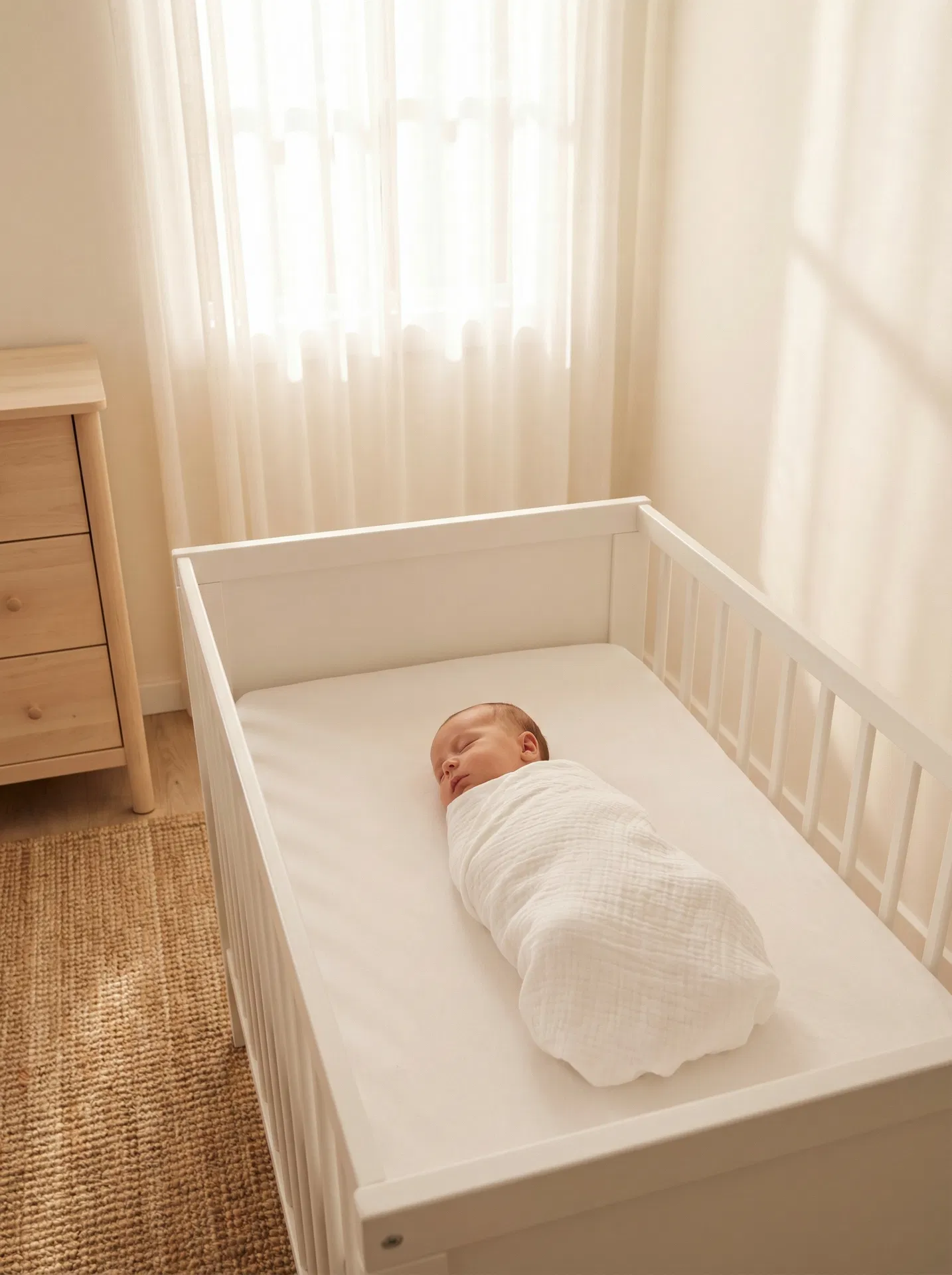
2 Year Old Fighting Bedtime? Here Is What Is Really Happening (And How to Fix It Gently)
Your toddler was sleeping beautifully. Then, almost overnight, bedtime became a battle. Every night brings a new stall tactic: one more book, one more hug, one more cup of water, one more question about where the moon goes. You are exhausted, frustrated, and quietly wondering if you have somehow broken their sleep.
You have not. What you are experiencing is the 2-year sleep regression, and it is one of the most common and most misunderstood sleep disruptions in early childhood. Understanding what is driving it makes all the difference between weeks of escalating battles and a calm, connected path back to peaceful bedtimes.
What Is the 2-Year Sleep Regression?
The 2-year sleep regression is a period of disrupted sleep that typically appears between 18 and 24 months, though some children experience it closer to 2.5 years. Unlike the 4-month regression, which is driven by a permanent change in sleep architecture, the 2-year regression is primarily developmental and behavioral. Three forces converge at this age to make bedtime suddenly very difficult.
The first is a surge in autonomy. Toddlers at this age are developmentally wired to assert independence. They are learning that they are separate people with their own preferences, and bedtime is one of the few areas where they feel they have real power. Refusing to go to sleep is not defiance for its own sake. It is a toddler practicing the very developmental skill they are supposed to be practicing.
The second is a leap in language and imagination. Around age 2, toddlers experience a significant expansion in their ability to think symbolically. This is wonderful for development and genuinely difficult for sleep, because an imaginative mind at rest generates fears, questions, and stories. Separation anxiety often intensifies at this stage for the same reason: your toddler can now imagine you being gone in a way they could not before.
The third is a shift in sleep pressure. Many 2-year-olds are in the process of dropping their afternoon nap, or their nap is shortening. This changes the balance of sleep pressure across the day and can make the evening window harder to land precisely.
Signs You Are Dealing With the 2-Year Regression
Not every difficult bedtime is a regression. Here are the signs that point specifically to the 2-year developmental shift rather than an environmental or schedule issue:
- Bedtime resistance appeared suddenly after a period of good sleep
- Your toddler uses stall tactics: requests for water, extra books, more hugs, or questions that seem designed to delay
- They call out or come out of their room repeatedly after being put down
- Night waking has increased, often with requests for a parent to come in
- Early morning waking has started or worsened
- Nap refusal has increased even though your child is clearly tired
- Separation anxiety at bedtime is more intense than it has been in months
If you are seeing three or more of these signs and your child is between 18 and 30 months, the 2-year regression is the most likely explanation.
What Does Not Work (And Why)
Before getting to what does work, it is worth naming the approaches that tend to make the 2-year regression worse, because many parents try them out of desperation and then feel stuck.
Giving in to every stall tactic teaches your toddler that persistence is the strategy that works. This does not mean you should be harsh. It means that each time you add one more book, one more song, or one more trip back into the room for a reason that was not part of the original routine, you are training your child that the routine is negotiable. The next night, they will push further to find the new limit.
Threatening consequences that you cannot or will not follow through on erodes trust and increases anxiety. Toddlers are remarkably good at detecting empty threats, and an anxious toddler at bedtime is a toddler who cannot settle.
Skipping the nap to make bedtime easier often backfires. An overtired 2-year-old does not fall asleep more easily. They fall asleep harder, wake more often overnight, and wake earlier in the morning. Overtiredness produces cortisol, which is a stimulating hormone that actively interferes with sleep onset.
The Gentle Framework That Works
The approach that works for the 2-year regression has three components: structure, choice, and warmth. These are not in tension with each other. They work together.
Structure: Set the Container Before You Enter It
The most effective thing you can do is define the bedtime routine clearly before it starts, not in the middle of it. Before you begin, tell your toddler exactly what the routine contains: "Tonight we are going to have a bath, put on pajamas, read two books, have one song, and then it is sleep time." Name each element. Name the limit. Do this in a calm, matter-of-fact tone, not as a warning or a negotiation.
When the routine is finished, it is finished. If they ask for one more book, you can acknowledge the feeling without reopening the routine: "I know you want another book. We read our two books. I love you. It is sleep time." Then leave. If they call out again, you can check in briefly and warmly, but the message is the same. The routine is a container. Once it is set, you hold it.
Choice: Give Power Within the Container
Toddlers fight bedtime partly because they feel they have no power over it. The solution is not to give them power over whether bedtime happens. It is to give them genuine power over how it happens.
Offer two choices at every step of the routine: "Do you want the blue pajamas or the striped ones?" "Do you want to pick the first book or should I?" "Do you want the hall light on or the nightlight?" Each choice is real. Each one gives your toddler a moment of genuine control. By the time you reach lights out, they have made five or six real decisions. The autonomy need is partially met, and there is less left to fight for.
This is not a trick. It is a developmentally appropriate way of meeting the underlying need that is driving the resistance.
Warmth: Stay Connected Through the Limit
Holding a limit warmly is a skill, and it is the hardest part of this framework for most parents. It means saying no without withdrawing love. "I know you want me to stay. I love you so much. And it is sleep time." The "and" matters. Not "but." "And." Both things are true at the same time: you love them completely, and the routine is over.
If your toddler is experiencing genuine separation anxiety at bedtime, a gradual retreat approach can help. Sit near the door the first few nights, then just outside the door, then further down the hall. This gives them the reassurance that you are present while building their capacity to settle independently. Move at a pace that feels manageable for your child.
Schedule Adjustments That Help
Beyond the routine itself, two schedule adjustments often make a significant difference during the 2-year regression.
First, check whether the nap is still the right length. A 2-year-old who naps for 2.5 to 3 hours in the afternoon may not have enough sleep pressure built up by 7:00 PM to fall asleep easily. Try capping the nap at 1.5 to 2 hours and waking your child by 2:30 to 3:00 PM at the latest. This preserves the nap (which most 2-year-olds still need) while ensuring enough sleep pressure for a smooth bedtime.
Second, consider whether bedtime is landing in the right window. For most 2-year-olds, the ideal bedtime is between 7:00 and 8:00 PM. If bedtime has crept later because of the battles, an earlier start to the routine (not later) is usually more effective. A slightly overtired toddler is harder to settle, not easier.
The Gentle Night Method
Ready to end the bedtime battles for good?
The Toddler Sleep Guide walks you through the exact structure, boundaries, and language to use with 1 to 3 year olds. No cry-it-out. No power struggles. A step-by-step night-by-night plan built around your toddler's developmental stage.
Get the Toddler Sleep Guide →
Instant PDF download · 30-day guarantee · No cry-it-out. Ever.
How Long Does the 2-Year Regression Last?
With a consistent approach, most families see significant improvement within 2 to 4 weeks. The regression itself is driven by developmental changes that are happening regardless of what you do. What you can control is whether the behavioral patterns that form during this period become permanent habits or temporary adaptations.
If you respond to the regression by adding more and more to the routine, by staying in the room until your child falls asleep, or by allowing your child to come into your bed each time they call out, those patterns tend to persist long after the developmental surge has passed. If you hold the structure warmly and consistently, the regression passes and leaves your child's sleep largely intact.
When to Get More Support
If you have been consistent for four or more weeks and bedtime is still a significant battle every night, it is worth looking at a few other factors: overall schedule, sleep environment, whether there are other stressors in your child's life (a new sibling, a change in childcare, a move), and whether the resistance is accompanied by genuine fear or anxiety that goes beyond typical toddler limit-testing.
A complete age-specific sleep plan that accounts for your toddler's schedule, temperament, and the specific patterns you are seeing can make the difference between weeks more of trial and error and a clear path forward.
The 2-year regression is hard. It arrives just when you thought you had sleep figured out, and it can feel relentless. But it is also temporary, it is developmentally meaningful, and it is something you can move through gently without sacrificing your relationship or your toddler's sense of security.
You are not starting over. You are navigating a developmental leap. That is a very different thing.
 Toddler Sleep