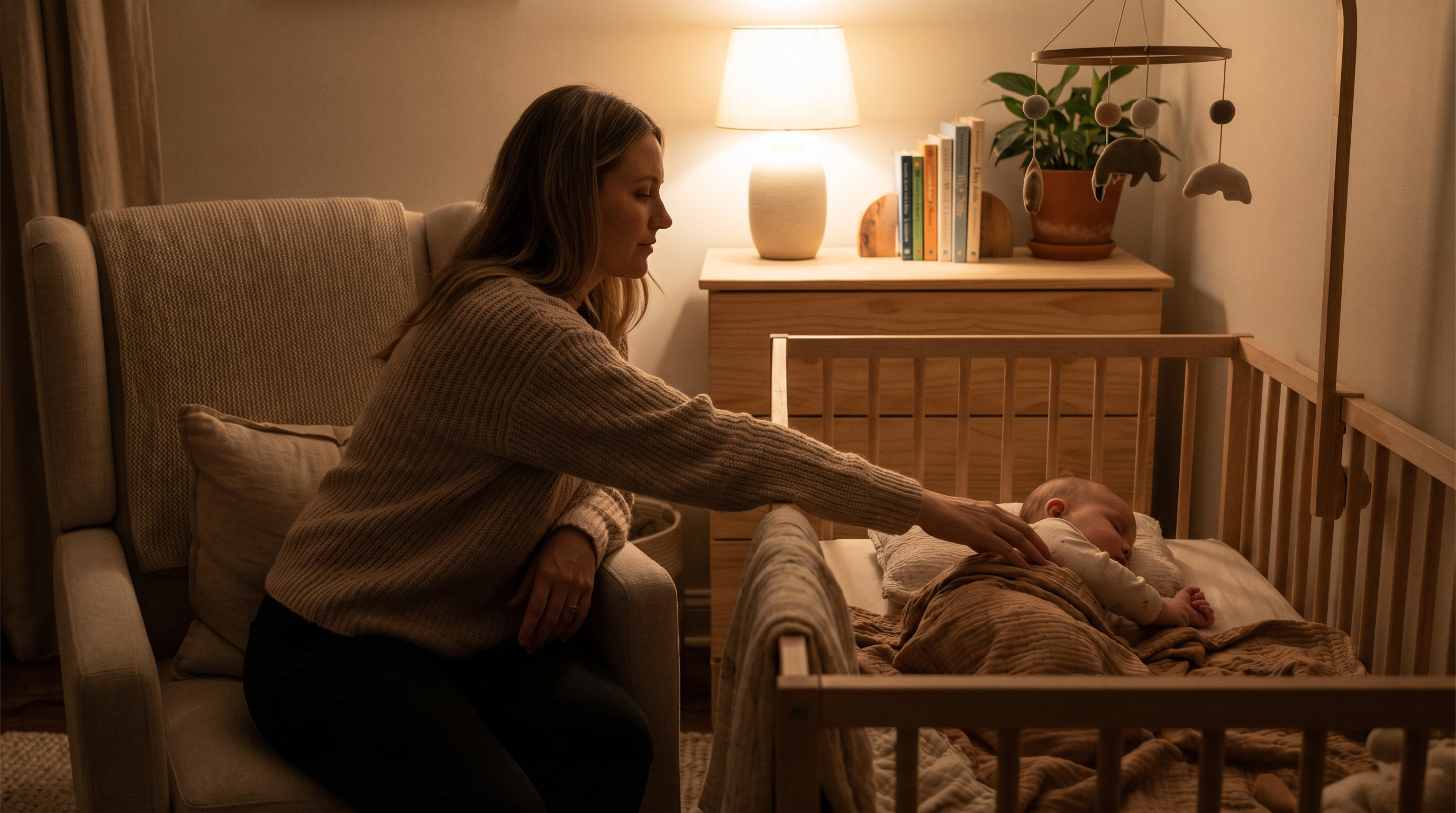
Your Partner Disagrees About Sleep Training. Here Is How to Actually Align.
Partner disagreement about sleep training is one of the most common conflicts in new parenthood. One partner wants to try cry-it-out because they are desperate for sleep. The other cannot tolerate the idea of leaving the baby to cry. Both positions are valid. Both come from love. And the disagreement can be genuinely damaging to the relationship and to sleep progress.
Here is a practical framework for finding common ground.
Why This Disagreement Is So Common
Sleep training disagreements usually come down to a difference in how each partner weighs two things: the immediate distress of the baby (which one partner may be more sensitive to) versus the long-term wellbeing of the family (which the other partner may be more focused on). Neither weighting is wrong. They reflect different but equally valid parenting values.
The disagreement is also often driven by different information. One partner has read that cry-it-out is harmful. The other has read that it is harmless. Both have found sources that confirm their existing position. This is the internet's contribution to parenting conflict.
Step 1: Agree on the Goal
Before discussing methods, agree on what you are trying to achieve. Most partners can agree on something like: "We want our baby to sleep longer stretches at night, and we want to achieve this in a way that does not cause lasting harm." Starting with the shared goal rather than the method reduces defensiveness.
Step 2: Agree on the Non-Negotiables
Each partner should identify their non-negotiables. For the partner who is opposed to cry-it-out, the non-negotiable might be: "I cannot implement any method that requires leaving the baby to cry alone." For the partner who is desperate for sleep, the non-negotiable might be: "We need to see meaningful improvement within two weeks."
Write these down. They become the parameters within which you find a solution.
Step 3: Find the Method That Meets Both Sets of Non-Negotiables
This is where gentle sleep methods become genuinely useful in the partner disagreement context. The Gentle Night Method meets the non-negotiables of both partners in most cases:
- It never requires leaving the baby to cry alone (satisfies the attachment-focused partner)
- It produces meaningful results in 7 to 14 nights (satisfies the sleep-deprived partner)
- Both partners can implement it consistently (critical for any method to work)
Step 4: Agree on Consistency
The most important agreement is not which method to use but that you will both implement it consistently. Inconsistency, where one partner implements the method and the other does not, is the most common reason gentle sleep methods fail. If one parent uses responsive settling and the other automatically nurses or rocks to sleep, the baby receives mixed signals and progress stalls.
Step 5: Set a Review Point
Agree to implement the chosen method for 14 nights without changing it, then review. This removes the ongoing negotiation and gives the method a fair trial. If it has not worked after 14 nights, you can reassess together from a position of shared experience rather than theoretical disagreement.
A Note on the Research
If your disagreement is partly driven by conflicting information about the safety of different methods, it may help to review the research together rather than separately. The honest summary: the current evidence does not show lasting harm from mainstream sleep training methods (including cry-it-out) for average-temperament babies after 4 months. It also does not show that gentle methods are less effective long-term. Both partners can find support for their position in the literature, which is why reviewing it together is more useful than each reading separately.
 Gentle Parenting