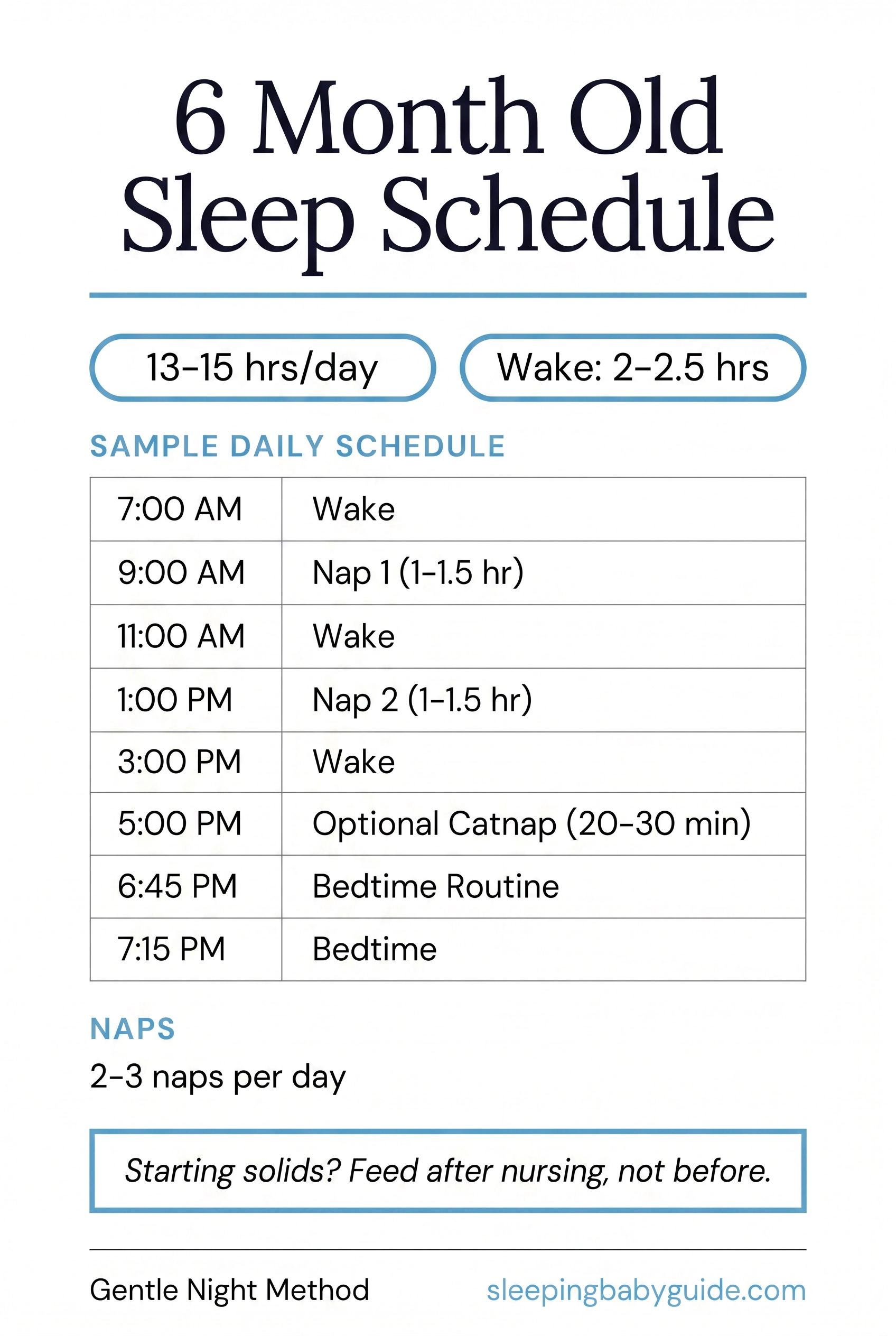
Six months is a major milestone. Most babies are ready for a 2 to 3 nap schedule, wake windows stretch to 2 to 2.5 hours, and many can sleep 10 to 11 hours overnight. Solids typically begin around this age, but food does not improve sleep. The 6-month sleep regression can cause temporary disruption as your baby becomes more aware of their environment and begins to develop object permanence.
Total Sleep
13 to 14.5 hours
Naps
2 to 3 naps
Wake Window
2 to 2.5 hours
Bedtime
6:30 PM to 7:30 PM
Night Feeds
0 to 1 time
This is a sample schedule based on a 7:00 AM wake time. Shift all times proportionally if your baby wakes earlier or later.
| Time | Activity |
|---|---|
| 7:00 AM | Wake and feed |
| 9:00 AM | Nap 1 (60 to 90 min) |
| 10:30 AM | Wake and feed |
| 1:00 PM | Nap 2 (60 to 90 min) |
| 2:30 PM | Wake and feed |
| 4:30 PM | Nap 3 (30 min catnap, if needed) |
| 5:00 PM | Wake and feed |
| 6:30 PM | Bedtime routine |
| 7:00 PM | Bedtime |
If your baby consistently refuses the third nap, they may be ready to transition to 2 naps.
Separation anxiety begins around 6 to 9 months. This is normal and does not mean you should stop working on independent sleep.
A 2-nap schedule works well: morning nap around 9 AM, afternoon nap around 1 PM.
Bedtime should be 2 to 2.5 hours after the last nap ends.
The 5 to 8 Month Sleep Guide covers everything in this schedule plus detailed gentle methods, troubleshooting, and real-life scenarios.
The 6-month sleep regression is a temporary period of increased night waking and nap disruption caused by developmental leaps, teething, and growing awareness of the environment. It typically lasts 2 to 6 weeks.
Most babies transition between 6 and 8 months. Signs include consistently refusing the third nap, taking a long time to fall asleep for it, or the third nap pushing bedtime too late.
No. Research consistently shows that starting solids does not improve infant sleep. Sleep is regulated by the circadian rhythm and sleep associations, not food intake.