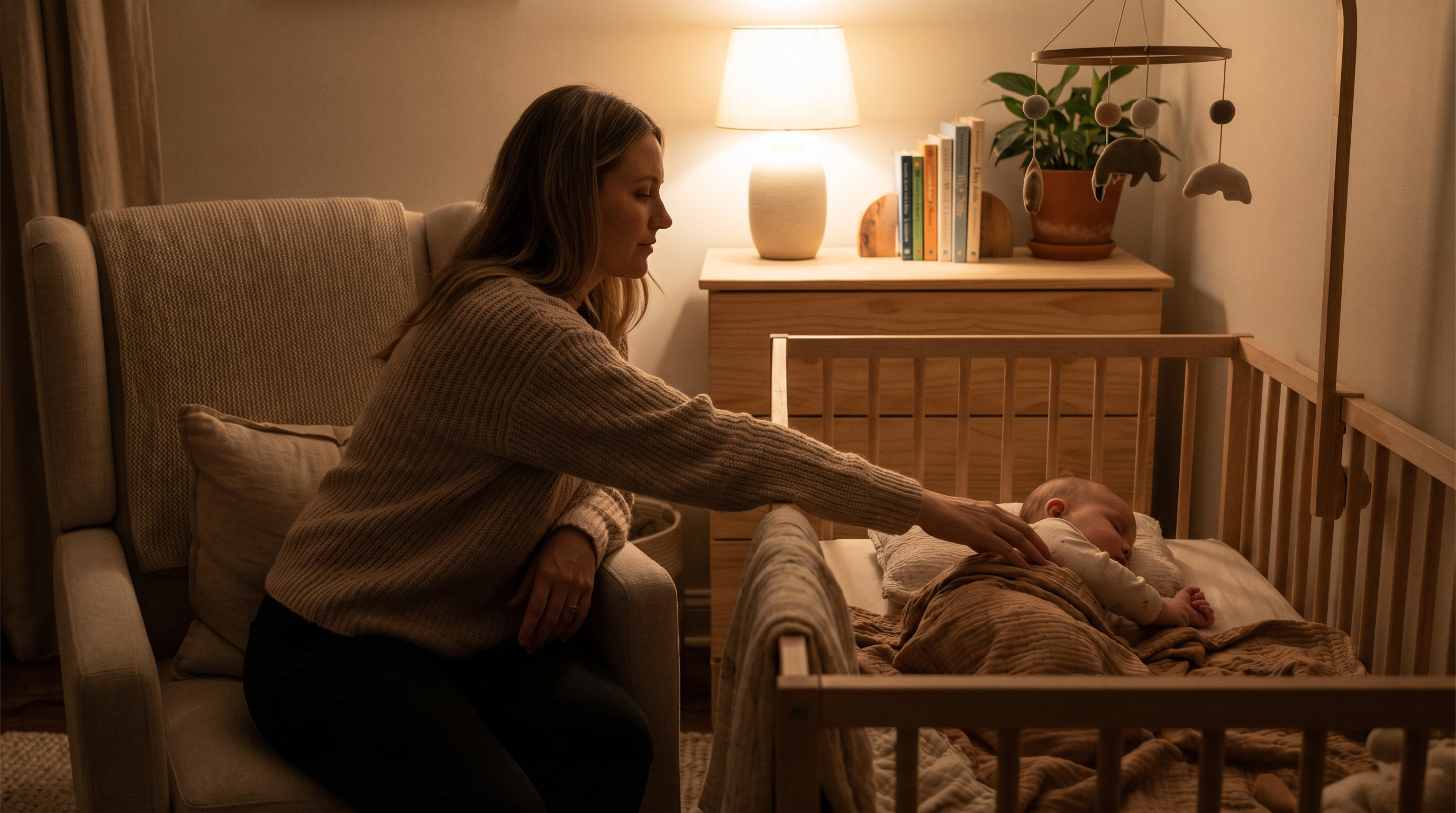
Gentle vs Cry-It-Out: Which Sleep Approach Fits Your Family?
As a parent, the quest for a good night's sleep for your little one, and by extension, for yourself, can feel like navigating a complex maze. You've likely heard the terms 'gentle sleep training' and 'cry-it-out' (CIO), and perhaps felt a pang of confusion, or even guilt, wondering which path is right for your family. It's a deeply personal decision, often fraught with conflicting advice and emotional weight, but understanding the philosophies behind each approach can bring clarity and peace of mind.
🌙A gentle note: Every family is different, and we believe you know your baby best. The information in this article is for educational purposes and reflects current safe sleep guidance. When trying anything new, trust your instincts and check in with your pediatrician if you have questions. You are doing a wonderful job.
Why This Happens
Understanding why babies struggle with sleep, or why their sleep patterns differ so much from adults, is the first step towards finding a solution that resonates with your family's values. Infant sleep is a complex dance of biological rhythms, developmental milestones, and environmental influences. It's not simply about a baby being 'naughty' or 'stubborn'; it's about their rapidly developing brains and bodies.
Newborns, for instance, have very immature circadian rhythms. Their sleep is polyphasic, meaning they sleep in short bursts throughout a 24-hour period, driven by immediate needs like hunger. This is entirely normal and biologically appropriate for their rapid growth and development. As they grow, their circadian rhythm begins to mature, influenced by light and dark cycles, leading to longer stretches of sleep at night.
Sleep cycles in babies are also different from adults. While adults typically move through distinct stages of sleep, including REM and non-REM, babies spend a much larger proportion of their sleep in lighter, active sleep (similar to REM). This lighter sleep is crucial for brain development, but it also means they are more easily roused. They might stir, vocalize, or even open their eyes during these lighter phases, which can often be mistaken for being fully awake or distressed.
Furthermore, babies experience significant developmental leaps, often referred to as 'sleep regressions.' These are periods where a baby's sleep suddenly deteriorates, often coinciding with mastering new skills like rolling, sitting, crawling, or even babbling. Their brains are so busy processing and practicing these new abilities that it can interfere with their ability to settle into sleep or stay asleep. These regressions are a sign of healthy development, not a setback, and require understanding and gentle support rather than harsh interventions.
Separation anxiety also plays a significant role, typically emerging around 8-12 months. As babies become more aware of their caregivers' absence, they may protest sleep or wake frequently, seeking reassurance. This is a normal and healthy attachment behavior, indicating a secure bond. Responding to these needs gently reinforces that bond and helps them feel safe, which is ultimately conducive to better sleep in the long run.
In essence, a baby's sleep challenges are often rooted in their natural biological and developmental processes. Recognizing this helps parents approach sleep with empathy and patience, understanding that their baby isn't intentionally resisting sleep, but rather navigating the incredible journey of early childhood.
What Most Parents Try First (And Why It Doesn't Stick)
When faced with persistent sleep challenges, many parents, out of sheer exhaustion and desperation, often turn to methods that promise quick fixes. The most commonly discussed, and often controversial, is the 'cry-it-out' (CIO) approach. This method, in its various forms, generally involves allowing a baby to cry for predetermined periods without intervention, with the goal of teaching them to self-soothe and fall asleep independently.
The appeal of CIO is understandable: parents are often told it's a fast track to a full night's sleep, and that a few nights of intense crying will lead to long-term sleep independence. For some families, it might appear to 'work' in the sense that the crying eventually stops, and the baby falls asleep. However, for many others, this approach can feel deeply unsettling and goes against their natural parenting instincts. The reason it often 'doesn't stick' or leads to lingering doubts is multifaceted.
Firstly, the core philosophy of CIO often clashes with the principles of attachment parenting and responsive care. Many parents feel that intentionally ignoring their baby's cries, especially at night, undermines the secure attachment they are working so hard to build. Babies communicate their needs through crying, and a consistent lack of response can, for some, lead to feelings of abandonment or insecurity, even if unintentionally. This can manifest as increased anxiety around bedtime or a reluctance to separate from parents.
Secondly, while a baby might eventually stop crying, it doesn't necessarily mean they have 'self-soothed' in a healthy way. Sometimes, the crying stops because the baby has learned that their cries will not elicit a response, leading to a state of 'learned helplessness.' This can be emotionally distressing for both the baby and the parents, who may carry guilt or regret long after the initial crying phase has passed.
Thirdly, CIO often fails to address the underlying reasons for a baby's sleep struggles. If a baby is waking due to hunger, discomfort, developmental leaps, or separation anxiety, simply letting them cry does not resolve these fundamental issues. The problem might resurface later, or the baby might develop new sleep associations that are equally challenging to manage. It's a symptomatic treatment rather than a holistic solution.
Finally, the emotional toll on parents cannot be overstated. Listening to your baby cry, especially when your instincts are screaming to comfort them, is incredibly difficult. It can lead to increased stress, anxiety, and even depression in parents, making the entire sleep journey feel like a battle rather than a gentle progression. Many parents abandon CIO because the emotional cost is simply too high, leading to a cycle of trying and failing that further erodes their confidence.
In essence, while CIO might offer a perceived shortcut to sleep, its potential impact on attachment, emotional well-being, and its failure to address root causes often make it an unsustainable or undesirable choice for families seeking a more gentle and responsive approach to their baby's sleep.
The Gentle Night Method Approach
At Sleeping Baby Guide, we believe that fostering healthy sleep habits doesn't have to involve tears or distress. Our philosophy is rooted in attachment science and responsive parenting, understanding that a secure bond and good sleep are not mutually exclusive. This is where The Gentle Night Method comes in: a structured, step-by-step framework designed to gently improve your baby's sleep while honoring their developmental needs and your family's values.
The Gentle Night Method is built on several core principles:
-
Understanding Your Baby's Cues: Before any intervention, we emphasize becoming a detective of your baby's unique signals. Are they truly hungry, or just stirring? Are they uncomfortable, or simply transitioning between sleep cycles? Learning to differentiate these cues allows for a more responsive and effective approach.
-
Optimizing the Sleep Environment: A calm, consistent, and safe sleep space is fundamental. This includes ensuring the room is dark, cool, and quiet (or uses white noise). A predictable environment signals to your baby that it's time for sleep, helping to regulate their internal clock.
-
Establishing a Predictable Bedtime Routine: Babies thrive on predictability. A consistent, calming bedtime routine, even a short one, helps them wind down and signals the transition from wakefulness to sleep. This might include a warm bath, a gentle massage, reading a book, or a quiet feeding. The key is consistency, night after night.
-
The Power of Le Pause: This is a cornerstone of our method. Instead of rushing in at the first sound, we encourage a brief, observational pause. Sometimes, babies stir, grunt, or even let out a few cries as they transition between sleep cycles or attempt to resettle themselves. A short pause (e.g., 30 seconds to a few minutes, depending on your baby's age and temperament) allows them the opportunity to practice self-settling without immediate intervention. If the crying escalates or becomes distressed, you respond immediately. This isn't about ignoring cries; it's about giving your baby a chance to develop their own settling skills within a supportive framework.
-
Responsive Comforting: When your baby needs you, you respond. This might involve a gentle pat, a soothing whisper, a brief cuddle, or a feeding if genuinely needed. The goal is to provide just enough support to help them back to sleep, gradually reducing the level of intervention as they grow and develop more independent sleep skills. This is a dance, not a rigid rulebook, adapting to your baby's evolving needs.
-
Gradual Adjustments, Not Overhauls: The Gentle Night Method advocates for small, incremental changes rather than drastic shifts. For example, if your baby is used to being rocked to sleep, you might gradually reduce the amount of rocking over several nights, eventually moving to patting in the crib, and then just a hand on their chest. This gentle progression minimizes distress for both parent and baby.
-
Prioritizing Connection and Attachment: Throughout the entire process, maintaining a strong, secure attachment is paramount. Our methods ensure that your baby always feels loved, safe, and responded to. We believe that good sleep is a natural outcome of a secure and nurturing environment, not something to be forced or achieved at the expense of your bond.
This approach acknowledges that every baby is unique, and what works for one may need slight adjustments for another. It's about empowering parents with tools and understanding, allowing them to gently guide their baby towards more consolidated sleep, always with empathy and responsiveness at the forefront. It's a journey of partnership with your baby, building trust and healthy habits together.
Ready to take action?
The complete step-by-step plan is in your age-specific guide
This article covers the science and principles. The full Gentle Night Method guide gives you the exact night-by-night plan, sample schedules, troubleshooting scripts, and what to do when things do not go as expected.
Find my guide →
 Sleep Training