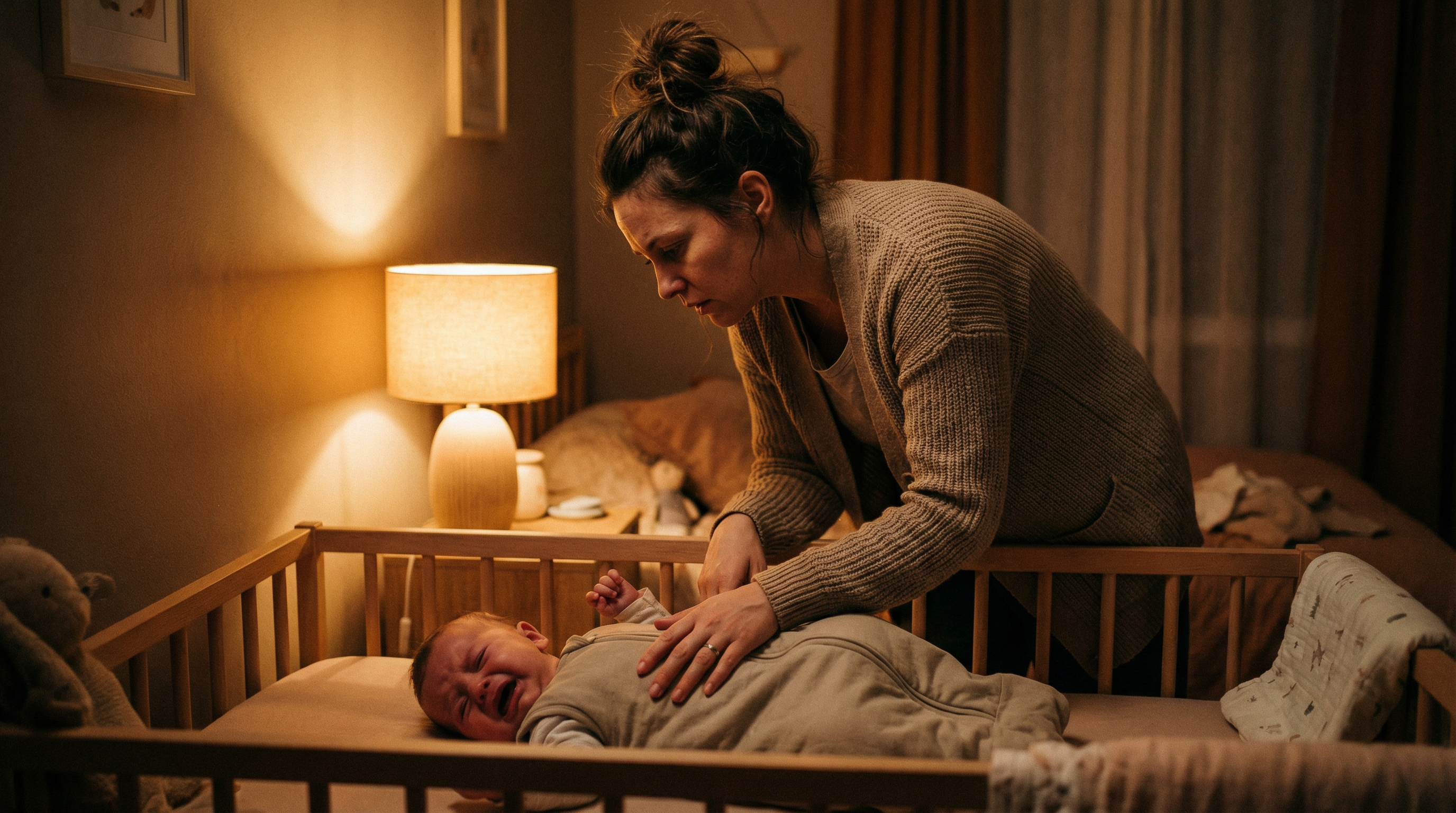
How to Gently Night Wean a 6-12 Month-Old Without Hours of Crying
As a parent, the nights can feel endless when your little one still wakes frequently for feeds. You're exhausted, perhaps a little touched out, and wondering if a full night's sleep is just a distant dream. The good news is, gently night weaning your 6-12 month-old is absolutely possible, and it doesn't have to involve tears or distress for either of you. We understand how precious those nighttime cuddles are, and how important it is to maintain that secure bond while also reclaiming some much-needed rest.
🌙A gentle note: Every family is different, and we believe you know your baby best. The information in this article is for educational purposes and reflects current safe sleep guidance. When trying anything new, trust your instincts and check in with your pediatrician if you have questions. You are doing a wonderful job.
Why This Happens
Understanding why your baby wakes at night for feeds is the first step towards a gentle solution. For infants under six months, night feeds are often a nutritional necessity. However, by 6-12 months, most healthy, full-term babies have the physiological capacity to go longer stretches without food, especially if they are getting adequate calories during the day. So, why do they still wake?
Several factors contribute:
- Comfort and Connection: Feeding, especially breastfeeding, is a powerful source of comfort and connection for babies. It's not just about hunger; it's about reassurance, closeness, and a familiar routine.
- Habit: Babies are creatures of habit. If they've been routinely fed at certain times during the night, their bodies and minds become accustomed to it, even if they don't strictly need the calories.
- Developmental Leaps: Around 6-12 months, babies are undergoing significant developmental changes. They might be learning to sit, crawl, stand, or even take their first steps. Their brains are incredibly active, processing new skills and information, which can disrupt sleep patterns and lead to increased night waking.
- Sleep Associations: If your baby consistently falls asleep while feeding, they may develop a "feed-to-sleep" association. When they naturally wake between sleep cycles (which all humans do), they may then need to feed again to transition back to sleep.
- Growth Spurts: While less frequent than in the newborn stage, growth spurts can still occur, temporarily increasing caloric needs and leading to more frequent night wakings.
It's crucial to remember that these wakings are normal and often serve a purpose for your baby. Our goal isn't to stop them from waking entirely, but to help them learn to resettle without needing a feed each time, while still feeling loved and secure.
What Most Parents Try First (And Why It Doesn't Stick)
When exhaustion sets in, it's natural to seek quick fixes. Many parents, desperate for sleep, might try approaches that promise rapid results but often lead to more stress and tears. Let's explore some common strategies and why they might not align with a gentle, attachment-focused philosophy:
- Abruptly Stopping All Night Feeds: This often involves simply refusing to feed the baby at night, sometimes leading to prolonged crying. While it might "work" in the sense that the baby eventually stops crying from sheer exhaustion, it can be incredibly distressing for both parent and child, potentially impacting the secure attachment bond you've worked so hard to build. It goes against our core value of "no cry-it-out, ever."
- Diluting Feeds: Some methods suggest gradually diluting formula or breast milk. While seemingly gentle, this can be confusing for a baby and doesn't address the underlying comfort or habit associations. It can also lead to frustration if the baby is still expecting a full feed.
- Ignoring Cues: Trying to stretch out feeds by ignoring early hunger cues can result in a very upset baby. This can escalate the situation and make it harder to soothe them back to sleep gently. It also contradicts the responsive parenting approach we advocate.
- Sending the Baby to Another Room: While some families choose this for various reasons, if the primary goal is to avoid night feeds without addressing the baby's needs for comfort and reassurance, it can feel isolating for the baby and create distance rather than closeness. Our approach emphasizes proximity and responsiveness.
These methods often fail to "stick" because they don't address the emotional and developmental needs behind the night wakings. They focus solely on the outcome (no night feeds) without considering the process and the impact on the parent-child relationship. A truly gentle approach acknowledges these needs and works with your baby, not against them. For more on gentle approaches, you might find our article on gentle sleep training methods no crying helpful.
The Gentle Night Method Approach
Our Gentle Night Method is built on the principles of attachment science and empathy, offering a structured, step-by-step framework for gentle sleep improvement. When it comes to night weaning, this means a gradual, responsive process that prioritizes your baby's emotional security while slowly reducing their reliance on night feeds.
Here's how we approach it:
- Ensure Adequate Daytime Intake: Before you even begin to think about night weaning, ensure your baby is getting enough calories during the day. Offer feeds more frequently during waking hours, especially in the late afternoon and evening. This helps ensure they're not genuinely hungry at night. Consult with your pediatrician if you have concerns about their intake or weight gain.
- Establish a Consistent Bedtime Routine: A predictable, calming bedtime routine signals to your baby that sleep is coming. This routine should be consistent every night and might include a warm bath, a gentle massage, reading a book, or singing a lullaby. This helps to build strong, positive sleep associations that don't involve feeding. Our guide on how to create the perfect bedtime routine for your baby offers detailed steps.
- Gradual Reduction of Night Feeds: This is the core of gentle night weaning. Instead of stopping cold turkey, you'll slowly reduce the duration or volume of night feeds. If breastfeeding, you might reduce the time at the breast by a minute or two every few nights. If bottle-feeding, you can reduce the ounces by half an ounce every few nights. The key is gradual so your baby barely notices the change.
- Introduce Other Comforts: As you reduce feeds, replace the feeding comfort with other forms of reassurance. This could be gentle rocking, patting, shushing, singing, or simply holding your baby close. The goal is to help them associate comfort with you and your presence, rather than solely with feeding.
- Practice Le Pause: When your baby stirs or makes sounds at night, resist the immediate urge to intervene. Practice "Le Pause" – a brief observational pause (a few seconds to a minute or two) to see if your baby can resettle themselves. Often, babies make noises in their sleep or can transition back to sleep with minimal intervention. This empowers them to develop self-soothing skills. You can learn more about this gentle technique in our Le Pause Starter Guide.
- Shift the Feed-to-Sleep Association: If your baby consistently falls asleep while feeding, try to shift the feed to the beginning of the bedtime routine, or at least ensure they are drowsy but awake when you put them down. This helps them learn to fall asleep independently without needing the breast or bottle as a sleep prop.
- Be Patient and Flexible: Gentle night weaning is not a race. There will be good nights and challenging nights. Be prepared to adjust your pace based on your baby's cues. If they are going through a growth spurt or developmental leap, you might need to pause or even temporarily increase feeds before resuming the weaning process.
Ready to take action?
The complete step-by-step plan is in your age-specific guide
This article covers the science and principles. The full Gentle Night Method guide gives you the exact night-by-night plan, sample schedules, troubleshooting scripts, and what to do when things do not go as expected.
Find my guide →
 Night Feeds